

Total and Partial Knee Replacement – Dr. Emad Ansari (Orthopaedic Surgeon, Maharashtra)
Total and Partial Knee Replacement are advanced orthopedic procedures performed to relieve severe knee pain and restore normal joint function when the knee joint becomes damaged due to conditions such as arthritis, injury, or long-term wear and tear. When conservative treatments like medications, physiotherapy, or injections fail to provide relief, knee replacement surgery may be recommended to improve mobility and quality of life.
Dr. Emad Ansari, a skilled Orthopaedic Surgeon in Maharashtra with expertise in joint replacement surgeries, provides advanced treatment options for patients suffering from severe knee joint problems. Using modern surgical techniques and a patient-centered approach, he focuses on reducing pain, restoring movement, and helping patients return to their daily activities comfortably.
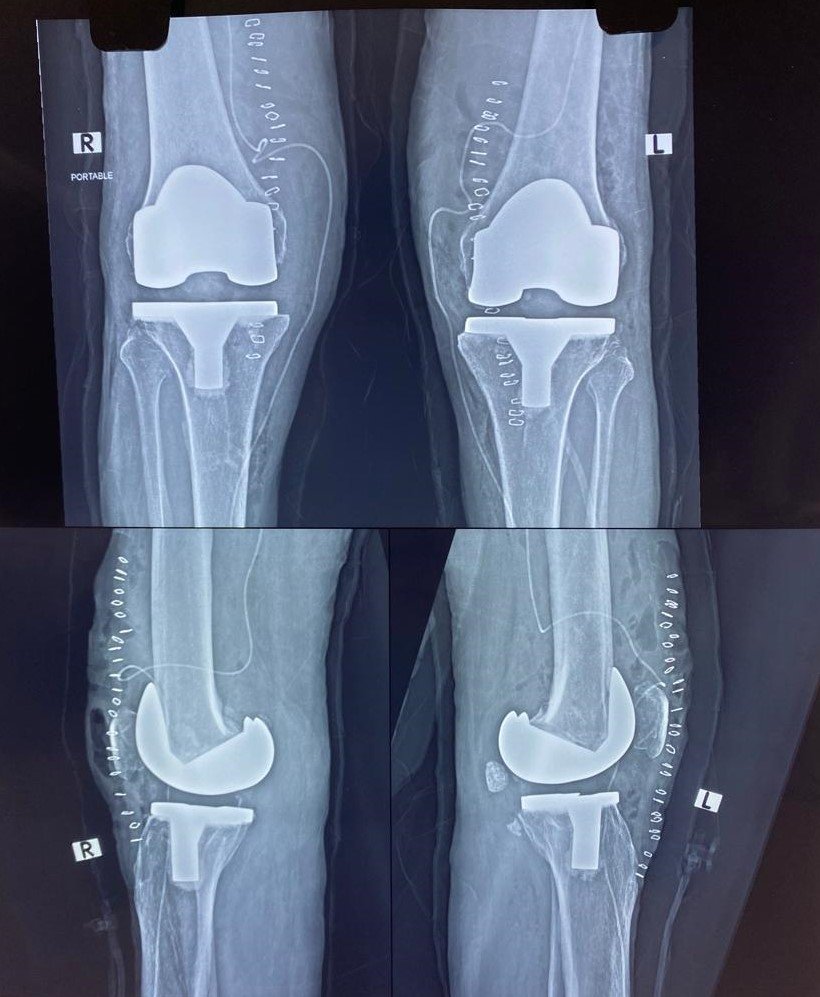
Total Knee Replacement (TKR): A surgical procedure in which the entire damaged knee joint is replaced with an artificial implant made of biocompatible cobalt-chromium alloys and high-grade cross-linked polyethylene. This procedure is commonly recommended for patients suffering from severe osteoarthritis, rheumatoid arthritis, or advanced knee joint damage. The artificial joint helps in restoring proper knee movement, improving stability, and significantly reducing pain.
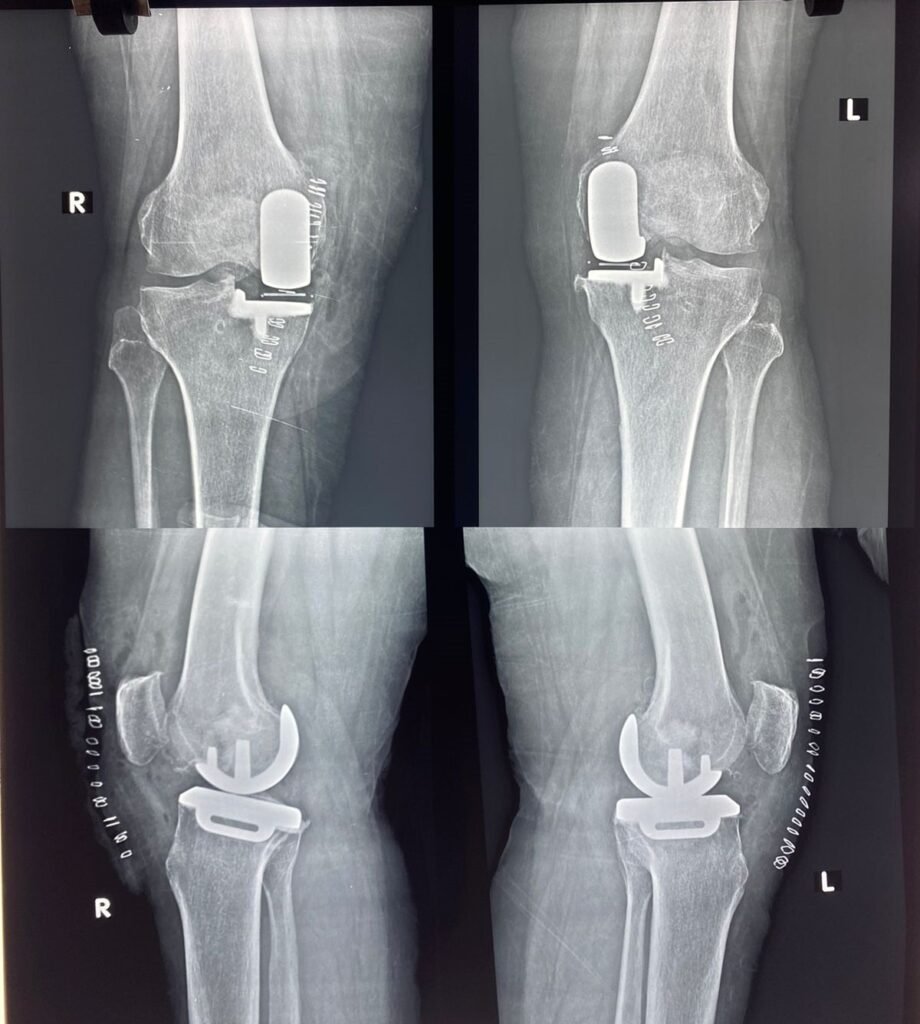
Partial Knee Replacement (PKR): Also known as unicompartmental knee replacement, PKR is performed when only one compartment (medial or lateral) of the knee joint is damaged while the remaining joint cartilage and cruciate ligaments are still healthy. In this procedure, only the affected portion of the knee is replaced, preserving natural bone and ligaments. This surgery is less invasive, allows for faster recovery, and produces more natural knee kinematics.
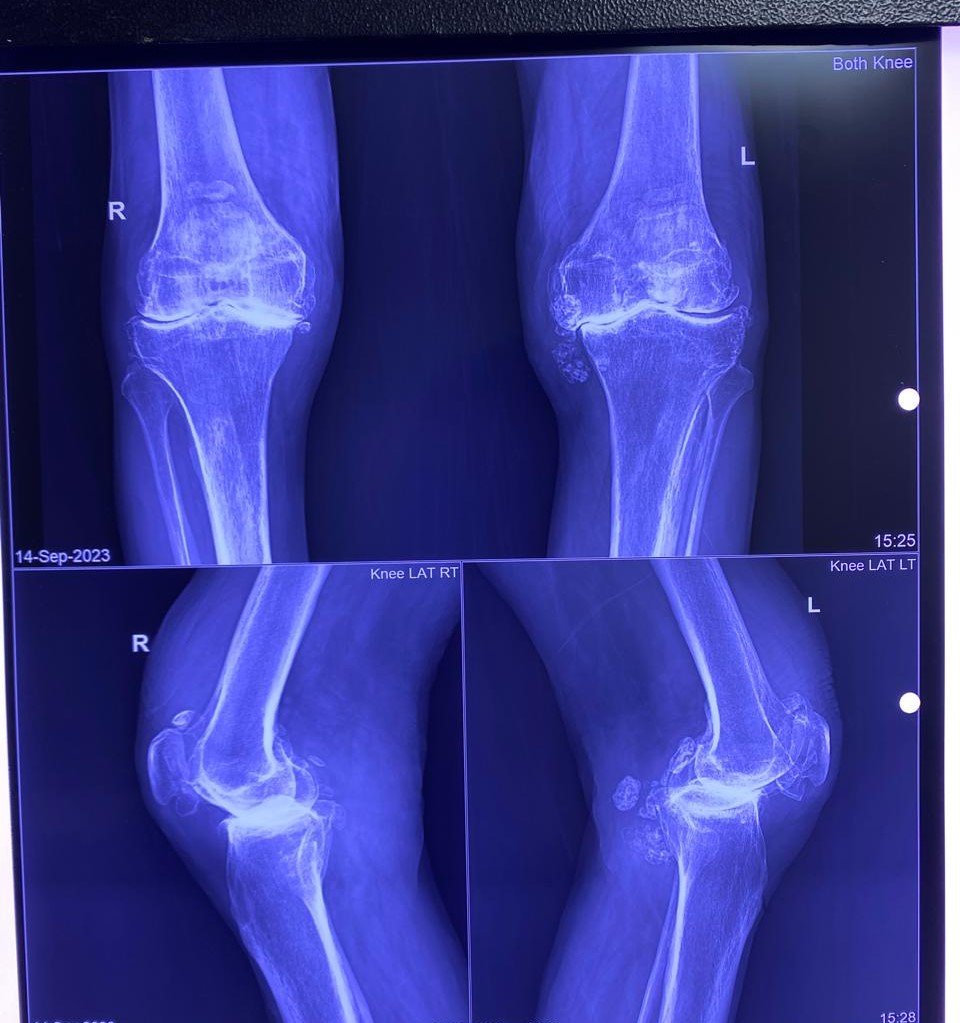
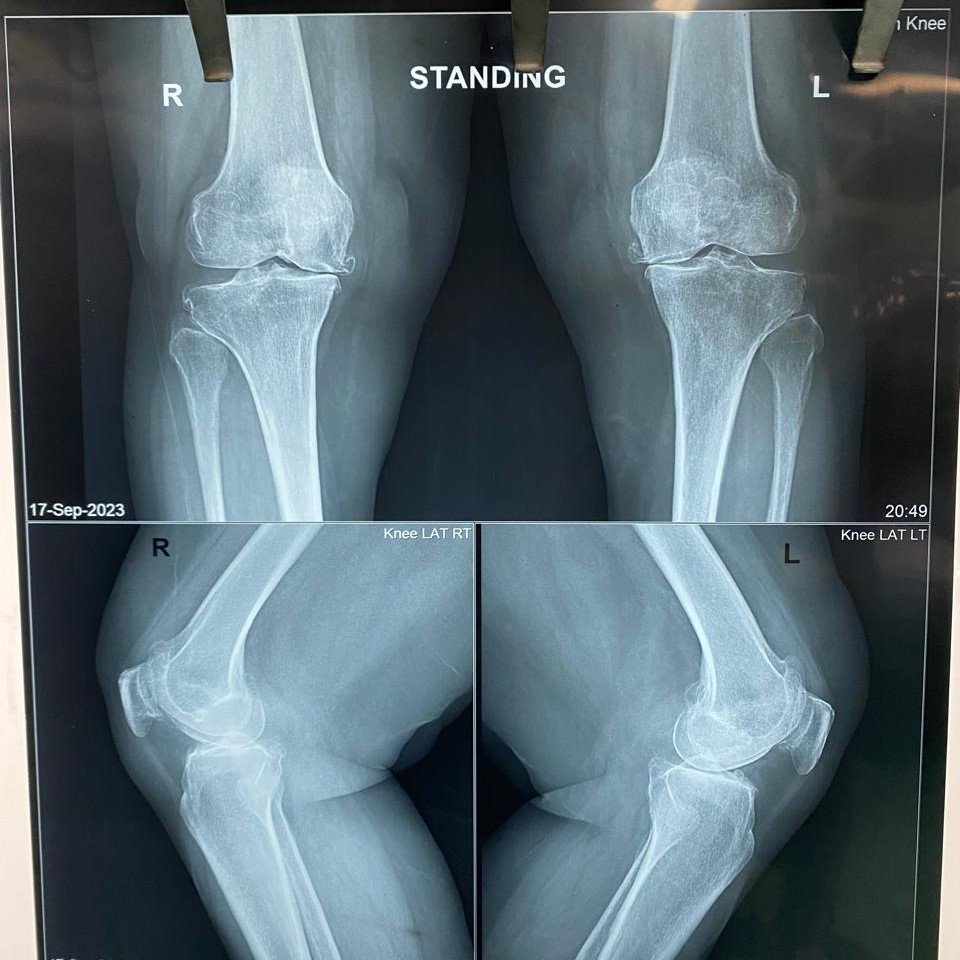
Clinical Case Study & Pre/Post-Op X-Rays
High-resolution radiographs demonstrating surgical fixation, anatomic bone alignment, and progressive recovery under Dr. Emad Ansari.
Conditions That May Require Knee Replacement:
Treatment Approaches & Procedures
Comprehensive Joint Assessment & Digital Planning
Detailed clinical evaluation including full-leg alignment X-rays (scannograms) and MRI/CT imaging to measure mechanical axis deformities, assess ligament stability, and select optimal implant sizing.
Total Knee Arthroplasty (TKR)
Resurfacing of the femoral condyles, tibial plateau, and patella with precision cutting blocks and high-performance prostheses to restore zero-degree neutral mechanical alignment and pain-free stability.
Unicompartmental Partial Knee Arthroplasty (PKR)
Minimally invasive bone-preserving procedure for localized single-compartment arthritis that retains both anterior and posterior cruciate ligaments for rapid return to active mobility.
Accelerated Post-Op Rehabilitation Protocol
Early assisted weight-bearing starting on Day 1 post-surgery, multimodal pain management, and tailored physical therapy targeting 110-120 degrees of knee flexion for independent everyday function.